
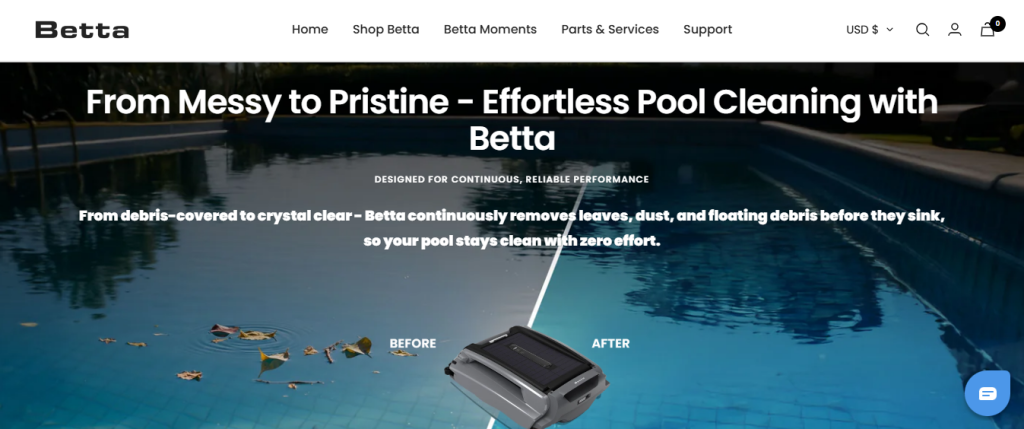
Betta has developed its robotic pool-skimming range around a combination of automated surface cleaning, solar-powered operation, sensor-assisted navigation and increasingly connected controls. Rather than treating a pool skimmer as a manually operated collection device, Betta integrates mechanical movement, rechargeable power systems and digital control into equipment designed to remain on the water surface. Across products such as Betta Neo, Betta Flex, Betta SE Plus and Betta SE, the underlying purpose remains the collection of floating debris before it settles into the pool. However, the technology supporting that task varies by model, with some products emphasizing solar-only operation while others add adapter charging, app connectivity, weather-adaptive scheduling or multiple cleaning modes. Betta Neo represents the most connected approach, with app control, gateway connectivity, weather-adaptive and scheduled cleaning, while Betta Flex emphasizes solar-powered cordless operation and dual cleaning modes. Betta SE Plus combines solar and adapter charging with automatic cleaning, and Betta SE focuses on solar-powered autonomous surface skimming. Together, these technologies illustrate how Betta approaches robotic pool maintenance as a combination of power management, movement, debris collection and automated control rather than a single mechanical cleaning function.
Betta’s Solar-Powered Approach to Robotic Pool Cleaning
Solar charging is one of the technologies that connects several Betta robotic skimmers to their intended outdoor operating environment. Betta Flex uses a completely solar-powered architecture, with its integrated solar panel charging the built-in battery without an AC, DC or USB charging port according to the product manual. Betta SE similarly uses a built-in lithium battery charged through its solar panel, while Betta SE Plus adds an adapter as a second charging method. Betta Neo also combines an integrated solar panel with wall-charger capability, creating a dual-power arrangement. These differences show that solar power is not implemented identically throughout the range. Betta Flex and Betta SE place greater emphasis on cordless solar operation, whereas Betta SE Plus and Betta Neo provide an additional charging route. Solar availability remains dependent on environmental conditions, so Betta’s product documentation provides different operating approaches for models with alternative charging methods or energy-saving modes. In Betta Flex, for example, Eco Mode can place the cleaner into pauses based on battery conditions. Betta’s technology therefore uses solar energy not simply as an accessory but as a central part of how robotic surface cleaning can be maintained outdoors.
Betta’s Intelligent Navigation for Automated Surface Movement
Autonomous movement is another important component of Betta’s robotic-skimming technology because surface cleaning requires the equipment to travel across the pool rather than remain in one location. Betta documentation describes sensor-assisted navigation across its robotic skimmer range, with ultrasonic sensing and gyroscope-based control identified for models such as Betta Neo and Betta Flex. These systems help the equipment detect obstacles and adjust movement while collecting floating debris. Betta SE and Betta SE Plus also use ultrasonic radar technology for obstacle detection, while shallow-water safeguards are incorporated to address pool structures that can interfere with movement. Betta SE Plus specifically uses a shortened ship-draft design for navigating shallow-water stairs and more complex structures. Betta Flex’s design emphasizes movement around pool edges and narrower areas, alongside compatibility with infinity-edge, in-ground and above-ground pools. The navigation technology is therefore closely linked to the physical environment in which each model operates. Sensors, propulsion components and protective features work together to support autonomous movement, although the products still require appropriate pool conditions and routine maintenance. Betta’s approach demonstrates that robotic skimming depends on navigation as much as collection hardware because floating debris cannot be systematically gathered without controlled movement across the water surface.
Betta’s App and Remote-Control Technology for Pool Management

Connected control is particularly prominent in Betta Neo, which introduces mobile-app management as a core part of its operating system. Betta states that the BettaBot app is exclusive to Betta Neo and supports remote management through a gateway system, with the product page identifying a connection range of up to 600 feet. The Neo manual describes app-based functions that include autonomous operation, direct movement control, battery and charging information, diagnostics and wireless firmware updates. This creates a digital layer around the physical skimming mechanism, allowing Betta Neo to operate automatically while also providing a method for monitoring and directing the cleaner. Other Betta models use different control arrangements. Betta SE and Betta SE Plus include wireless remote controls for switching between automatic and remote operation, while Betta Flex is documented with optional remote control and operating modes. The distinction is important because connected technology does not simply duplicate the mechanical cleaning system. In Betta Neo, software can influence scheduling, weather-adaptive cleaning and operational monitoring. Betta’s app technology therefore represents a move toward managing pool-surface maintenance as an automated activity that can be monitored digitally rather than requiring physical interaction with the skimmer for every cleaning session.
Betta’s Weather-Adaptive Technology for Cleaning Schedules
Weather-adaptive cleaning adds another layer to Betta’s approach to automation by connecting cleaning schedules with outdoor conditions. Betta Neo is specifically described as supporting smart weather-adaptive cleaning as well as customized scheduled operation. This technology is relevant to surface skimming because outdoor weather can influence how quickly leaves, pollen and other floating material accumulate in a pool. Instead of relying solely on a fixed timetable, the weather-adaptive function is intended to adjust cleaning activity according to upcoming weather information. Betta also provides scheduled and automatic operating options, allowing the robotic skimmer to function according to different maintenance patterns. This capability distinguishes connected scheduling from simple remote control. Remote control allows a command to be issued, whereas weather-adaptive scheduling introduces environmental information into the timing of operation. Betta Flex approaches changing conditions differently through its Normal and Eco modes, with the manual explaining that Eco Mode can pause operation according to battery conditions during periods with insufficient sunlight. Betta SE Plus addresses weather-related charging limitations through its combination of solar and adapter charging. Across these systems, Betta connects weather, energy availability and cleaning behavior in different ways, showing how environmental conditions can influence automated pool-skimming technology.
Betta’s Debris-Collection Technology for Surface Skimming
The technological foundation of Betta’s robotic cleaners remains the ability to capture floating debris while the equipment moves across the water. Betta identifies materials such as leaves, dust, pollen, insects and pet hair as examples of debris collected from the pool surface. The products use debris baskets that retain captured material until maintenance is performed, with Betta SE and Betta SE Plus featuring large fine-mesh baskets with top handles. Betta Flex uses a removable collection basket, while Betta Neo combines its debris collection system with twin motors and an integrated intake mechanism. The motors are described as Salt Chlorine Tolerant, allowing the relevant models to operate in saltwater and chlorine pool environments within the conditions specified by Betta. The distinction between surface skimming and broader pool cleaning remains important. These products are designed primarily to remove floating material from the water surface rather than scrub every submerged pool surface. Betta’s technology consequently concentrates on intercepting debris before it settles, using propulsion, intake and collection components as a coordinated system. The removable basket is also an important part of the maintenance cycle because collected material must eventually be emptied and the equipment kept clear for continued operation.
Betta’s Design Technology for Different Pool Environments
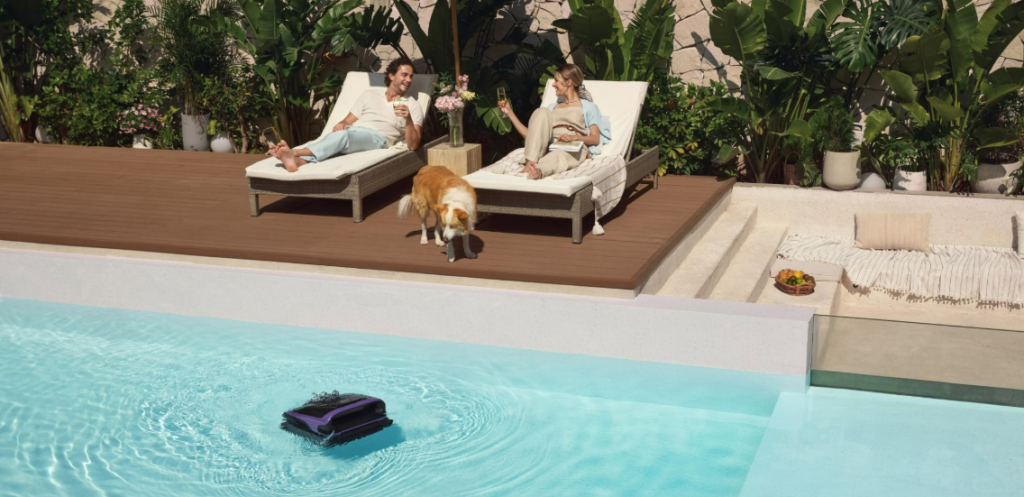
Physical design plays an important role in determining how Betta’s robotic skimmers interact with different pool environments. Betta Flex uses a low-profile body and soft-touch casing, with the product positioned for infinity-edge, in-ground and above-ground pools. Betta Neo, Betta SE Plus and Betta SE are listed for above-ground and in-ground applications. Soft-touch or UV-resistant construction is used across the range to address exposure to pool water and sunlight, while shallow-water safeguards help the equipment manage pool structures that can interfere with floating movement. Betta SE Plus uses a shortened ship-draft design for shallow-water stairs and complex structures, while Betta SE includes adjustable water-depth bumper rods designed to reduce the possibility of becoming stuck in shallow areas. These design elements demonstrate that robotic pool skimming is influenced by more than motor power. The shape of the body, position of protective components, interaction with pool edges and ability to respond to changing water depth all affect how the equipment can function. Betta’s approach therefore combines material selection, body geometry and navigation hardware to create products intended for specific pool environments while retaining the shared function of automated surface debris collection.
Betta’s Connected Robotic Approach to Modern Pool Maintenance
Betta’s current robotic-skimming technology brings together several systems that were traditionally handled separately in pool maintenance equipment. Solar charging provides an energy source suited to outdoor operation, rechargeable batteries store that energy, motors create movement, sensors support navigation, collection baskets retain debris and control systems determine how cleaning takes place. Betta Neo adds the most visible connected layer through its dedicated app, gateway, weather-adaptive scheduling, monitoring functions and firmware-update capability, while Betta Flex emphasizes cordless solar operation and selectable cleaning modes. Betta SE Plus adds dual charging and automatic surface cleaning, and Betta SE combines solar operation with autonomous cleaning and remote control. The resulting technology is not a single feature but an interconnected operating model in which energy management, navigation and debris collection support the same maintenance objective. Betta’s manuals and product information also show that automation does not remove the need for maintenance: debris baskets, solar panels, propellers, impellers and other components still require attention when conditions demand it. The development of these systems indicates a broader direction for Betta’s robotic pool-cleaning range, where automated surface skimming increasingly combines mechanical cleaning with sensors, software, alternative charging methods and environmental awareness.