

The CuteBee Thames Bookstore DIY Kit belongs to the growing family of book nook kits, small wooden dioramas designed to slide between real books and turn an ordinary shelf into a miniature street scene. This release recreates a vintage British-style bookshop with a red-brick exterior, crowded interior shelving and layered architectural details. CuteBee is a miniature wooden craft label that describes itself as headquartered in Shenzhen and founded in 2016. It positions its kits for teenagers and adults rather than young children. The Thames Bookstore DIY Kit is sold mainly through hobby retailers and online marketplaces, so pricing, stock and extras differ from seller to seller. This review examines the kit’s design, construction, lighting, value and audience, relying on published retailer specifications to separate verifiable details from marketing impressions.
CuteBee Design Concept and Scale
The Thames Bookstore DIY Kit is built at 1:24 scale, a common size for miniature room scenes because it keeps tiny furniture, shelving and printed accessories legible without making the finished piece unwieldy. Retail listings give the assembled dimensions as roughly 22 by 14 by 17 centimetres, which is compact enough for a standard bookcase. The visual concept centres on a red-brick shopfront in a traditional British style, with a recessed interior packed with shelves, stacked volumes and paper ephemera. Depth comes from layered wooden panels, so the viewer looks through the storefront into receding spaces instead of at a flat picture. One notable design choice is the interchangeable facade, which offers a gold-patterned classic front and a flower-decorated alternative. That option gives the finished model some seasonal flexibility, although swapping fronts later depends on how securely the builder fixes the panels during assembly.
CuteBee Assembly Experience and Difficulty
The kit contains 343 components made from wood and paper, along with a battery box, wiring and an illustrated instruction manual. Retail listings recommend it for ages fourteen and above, rate its difficulty at three stars and estimate four to six hours of work. That places the Thames Bookstore DIY Kit above simpler CuteBee releases such as the Green Life Bookshop kit, which lists 196 pieces, a two-star rating and a build time of three to five hours. Parts are numbered and assembled layer by layer, which keeps the process orderly, yet the smaller paper pieces and narrow joins call for patience and a pair of tweezers or similar tools. Glue may be required and is not always included, a detail worth checking before purchase. Newcomers to miniature building may find the middle stages demanding, while experienced hobbyists will probably treat the project as a relaxed weekend activity that rewards steady, unhurried work.
CuteBee Lighting System and Display Value

Illumination is central to the appeal of any book nook, and the Thames Bookstore DIY Kit includes an LED system powered by two AAA batteries, which retailers note may need to be bought separately. The warm light is meant to pick out the shelving and the interior of the shop, giving the scene an evening atmosphere when it sits between real books. Battery power avoids the need for a mains adapter, so the finished piece can be placed almost anywhere, but it also means occasional battery replacement and a compartment that must stay reachable. Wiring has to be routed carefully during construction, because cables pinched between layers can cause flickering or failure later. Builders should decide where the battery box will sit before closing up the structure, since reaching it afterwards can be awkward. The lighting is a practical strength rather than a spectacle, and it contributes more to the display value than any single decorative element in the kit.
CuteBee Materials and Build Quality
Material choices combine wood with printed paper elements, a mixture common across the category. Wood supplies the structural frame and gives the model rigidity, while paper accessories such as signage, posters and book spines carry much of the fine detail. This approach keeps weight and cost reasonable, yet paper is more vulnerable to moisture, dust and handling than the wooden parts. The retailer specification reviewed does not mention a dust cover for this kit, so owners who want long-term protection may need to arrange their own enclosure or keep the piece away from direct sunlight. Compared with plastic alternatives such as certain Robotime miniature sets, a wood-based CuteBee kit offers a more tactile building experience and a matte, handcrafted look.
CuteBee Pricing and Retail Availability
Pricing for the Thames Bookstore DIY Kit depends heavily on the seller. Hobbyco, an Australian hobby retailer, listed it at 71.99 Australian dollars, marked down twenty per cent from 89.99, and the store advertises free shipping on orders above 125 dollars. Other CuteBee kits sit in a similar band. The Literature Bookstore kit appeared at 49.99 and The Grace of the Forest at 69.99 on the same site, while the Kirishima Cha-an miniature house was listed at 39.99 US dollars on an American anime retailer and the Fantasy Plant Shop edition near 74 pounds at a British store. Marketplace resales can cost more once shipping is added. Given 343 components, integrated lighting and several hours of building time, the discounted price is reasonable for the category, though buyers should confirm that the seller is authorised, because lookalike kits are widespread and prices change frequently.
CuteBee Audience and Practical Uses
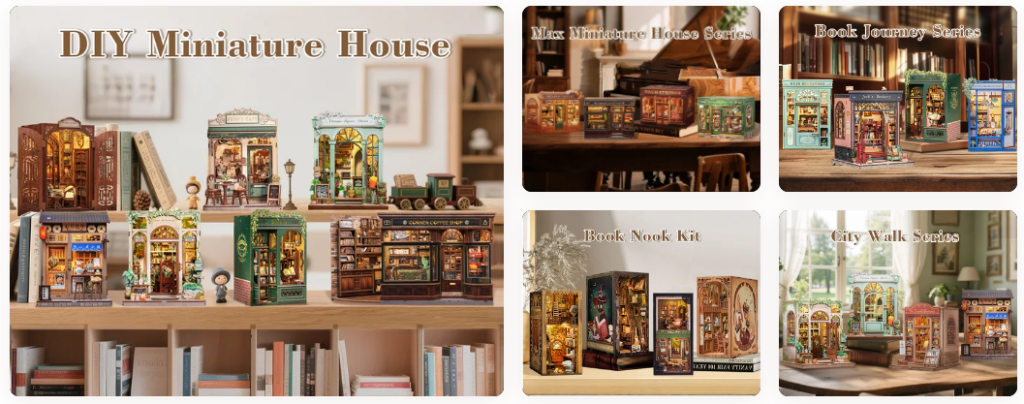
The intended audience is broader than the book-lover label implies. Teenagers and adults who enjoy tabletop crafts, collectors of miniature architecture and gift buyers looking for a hands-on present are the most natural fits. The vintage bookshop theme also appeals to readers who like cosy, literary aesthetics. Because assembly takes several hours and rewards steady attention, the Thames Bookstore DIY Kit suits people who find repetitive fine-motor work calming. It is less suitable for anyone wanting a quick project, for young children, or for those without a flat workspace and a few basic tools. Compared with the simpler Green Life Bookshop or Literature Bookstore, this kit asks for more commitment but returns a denser, more architecturally interesting model. Its compact footprint also allows flexible display, whether as a shelf insert, a desk accent or a centrepiece for a small collection of miniature scenes arranged together.
CuteBee Market Position Among Book Nook Brands
CuteBee competes in a crowded book nook segment alongside Robotime, Rolife and numerous unbranded sellers, many of which rely on similar themes such as bookstores, florists and narrow alleys. The brand’s distinguishing features include a broad catalogue of themed scenes, Japanese-inspired storefronts such as Morita-Ya and the Sakura Kimono Shop, and the regular inclusion of LED lighting across its wooden kits. Weaker points are the dependence on third-party retailers, limited official product information and variable seller quality, which makes verifying authenticity important. Shoppers should also distinguish the miniature kit maker from unrelated businesses that share a similar name. Within this landscape, the Thames Bookstore DIY Kit stands as a mid-range, mid-difficulty option with a distinctive British theme, a clear specification and practical trade-offs involving batteries, adhesives and paper durability that buyers can weigh before committing to the project.