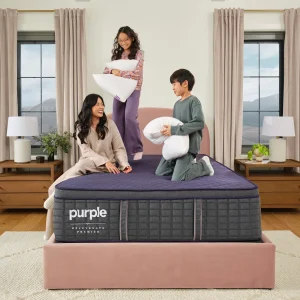
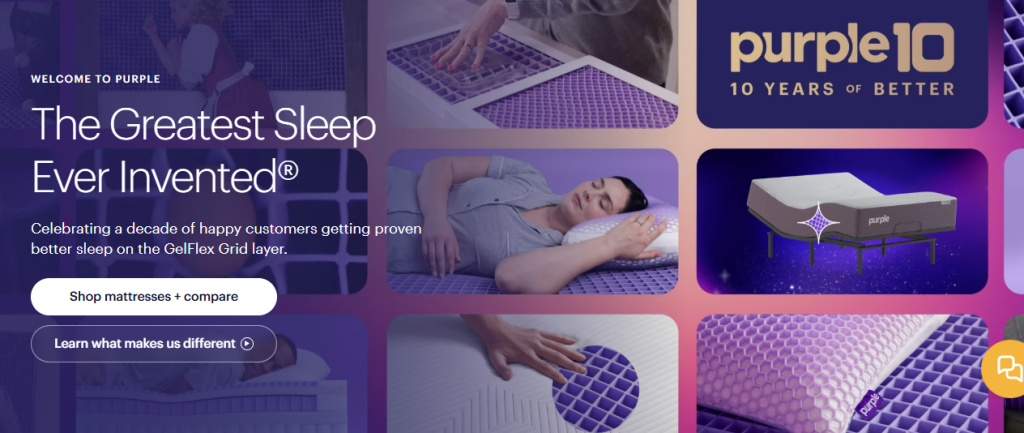
Purple is a US mattress and sleep-products brand best known for its proprietary GelFlex Grid, a flexible polymer structure designed to adapt to pressure while allowing air to circulate through the mattress. Among its hybrid offerings, the Purple RestorePlus mattress combines this grid technology with comfort foams and a responsive support system. It is designed for sleepers who want a balance between cushioning and stability, particularly those who find traditional memory foam too enveloping or conventional spring mattresses too firm. Rather than relying entirely on soft foam layers, the RestorePlus uses a grid-based surface intended to bend beneath pressure points while supporting surrounding areas. The result is a different feel from the slow-sinking sensation associated with many all-foam beds. Purple sells several mattress models and configurations, and prices can vary according to size, promotions, and the selected version, so the current product listing should be checked before purchase.
Purple RestorePlus Construction and GelFlex Grid Design
The central feature of the Purple RestorePlus is the GelFlex Grid, a flexible polymer layer arranged in a repeating open structure. Purple describes the grid as designed to collapse under direct pressure while remaining supportive around areas that are not pressing into it. This approach differs from a uniform foam surface, which generally compresses across a broader area when weight is applied. The open grid structure also creates spaces through which air can move, potentially helping heat escape from the sleeping surface. Beneath the grid, the RestorePlus uses comfort materials and a support system intended to provide a stable foundation. Its hybrid construction combines cushioning with the responsiveness associated with a spring-based core, rather than depending solely on dense foam. The precise layer arrangement and specifications should be verified on the current product page because Purple’s mattress lineup and configurations may change. The mattress is designed to accommodate normal movement and pressure changes as a sleeper turns or shifts position during the night.
Purple RestorePlus Comfort for Different Sleeping Positions
Comfort on the RestorePlus depends on how a sleeper’s weight is distributed across the GelFlex Grid and the layers beneath it. Side sleepers often need enough cushioning around the shoulders and hips to reduce concentrated pressure, while back sleepers generally benefit from a surface that supports the natural curve of the lower back. Stomach sleepers may prefer a firmer feel that limits excessive sinking around the pelvis. Purple’s grid is intended to respond locally to pressure, which can help the surface feel accommodating without producing the deep, slow compression associated with some memory-foam designs. Still, individual results vary with body size, posture, and personal preference. A lighter sleeper may experience the grid differently from someone whose weight compresses the comfort layers more deeply. Couples with different firmness preferences should assess whether the available RestorePlus configuration provides a suitable compromise. The model’s hybrid support may appeal to people who want some cushioning without feeling surrounded by foam, but it cannot guarantee pain relief or correct an underlying medical problem.
Purple RestorePlus Temperature Regulation and Airflow
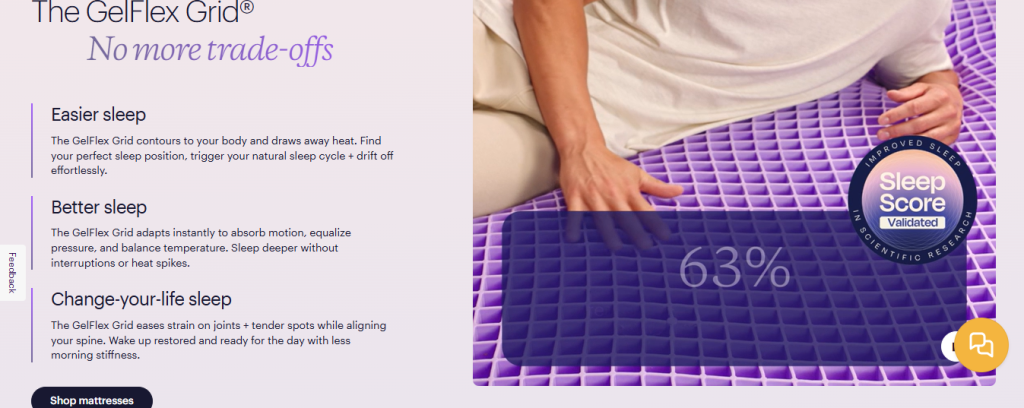
Temperature is a common concern for people who find that foam mattresses retain too much warmth. Purple addresses this issue through the open design of its GelFlex Grid, which leaves spaces between the flexible polymer elements instead of creating a completely solid surface. These channels are intended to allow air to move through the comfort layer as the sleeper changes position. The hybrid structure can also influence how heat moves away from the body, although overall temperature depends on the entire mattress, bedding, room conditions, and the sleeper’s physiology. The RestorePlus should therefore not be treated as a guarantee of cool sleep in every environment. Thick comforters, waterproof protectors with limited breathability, and high bedroom temperatures can all affect the result. The mattress cover also contributes to the experience, and customers should consult the current specifications for its materials and care instructions.
Purple RestorePlus Motion Isolation and Edge Stability
For couples, mattress performance involves more than individual comfort. Movement transfer can affect whether one person notices a partner turning, getting out of bed, or changing position during the night. The RestorePlus combines a flexible grid with hybrid support, and its ability to limit movement depends on how those layers respond together. Foam comfort materials can absorb some motion, while spring-based support can create a different response from an all-foam design. Purple’s grid is built to flex beneath pressure, but it should not be assumed to eliminate movement completely. Couples who are particularly sensitive to disturbance should test the mattress with a partner if possible and compare it with alternatives known for strong motion isolation. Edge support is another practical factor because it affects how secure the perimeter feels when sitting down, getting dressed, or sleeping near the side. Hybrid mattresses often use reinforced structures or firmer perimeter components to improve stability, but the RestorePlus’s precise edge performance should be assessed against the current model specifications and independent hands-on testing.
Purple RestorePlus Pricing and Purchase Value
The RestorePlus occupies the premium end of Purple’s hybrid mattress range, and its price reflects the specialised grid layer and zoned coil construction. On Purple’s US website, the Queen size was listed at $3,599, with a promotional price of $3,299 when checked in October 2026. Other listed sizes included Twin XL at $2,799 on promotion, Full at $3,199, King and California King at $4,099, and Split King at $5,598. These are time-sensitive US prices rather than guaranteed offers, and taxes, delivery arrangements, and promotional conditions may affect the final total. The brand also advertises a lowest-price guarantee for eligible purchases made through its official channels, subject to restrictions. At this price level, the RestorePlus is substantially more expensive than many standard foam and hybrid mattresses. Its strongest value argument is the combination of a three-inch GelFlex Grid, zoned support coils, and a surface designed to balance pressure relief with airflow. Shoppers who mainly need a conventional medium-feel mattress may find less expensive alternatives that meet their needs.
Purple RestorePlus Delivery, Trial, and Warranty
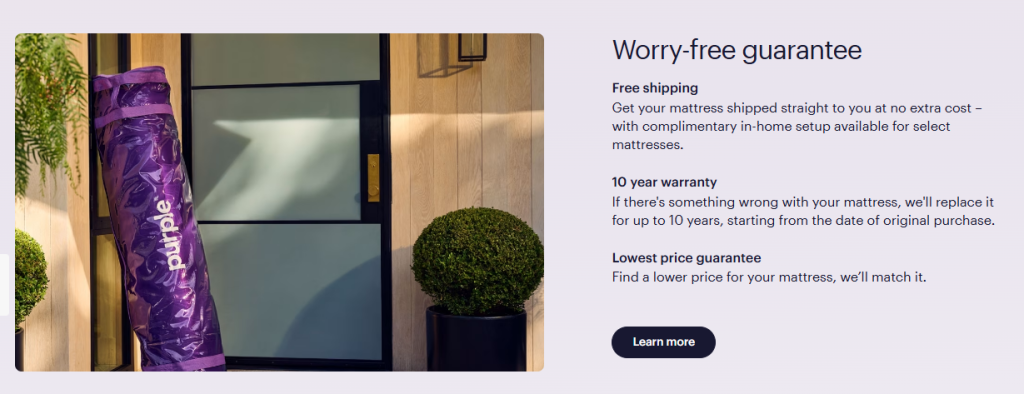
Purple offers a 100-night trial for the RestorePlus purchased through its eligible direct sales channels, giving customers time to assess the mattress at home. The company recommends sleeping on it for at least 21 nights before requesting a return or exchange, allowing time to adjust to the grid’s unusual feel. Its published terms state that eligible returns are collected and refunded, but buyers should read the current return policy carefully because conditions and fees can vary by product and purchase channel. Independent mattress testing site NapLab reported in May 2026 that Purple had introduced return fees ranging from $150 to $350 across different mattress collections; the applicable amount should be confirmed for the RestorePlus order before checkout. Purple lists a 10-year limited warranty for the mattress, covering qualifying defects under the terms of the warranty rather than every form of wear or damage. The warranty is intended for the original purchaser’s personal use and requires proof of purchase and other specified documentation.
Purple RestorePlus Suitability for Different Households
The RestorePlus is most appropriate for shoppers who want a premium hybrid mattress with a distinctive, responsive surface and stronger emphasis on airflow than many traditional foam beds. Its medium-soft feel is designed to appeal particularly to back, side, and combination sleepers, although body weight and personal preference can change the amount of cushioning experienced. Sleep Foundation’s July 2026 evaluation rated the model highly for temperature control and motion isolation, while noting that some sleepers weighing more than 230 pounds may need a firmer surface. The same testing placed edge support below its strongest categories, illustrating why mattress performance should be assessed across several factors rather than a single headline feature. The price may be difficult to justify for budget-conscious buyers, and the grid texture may not appeal to people who prefer a conventional plush or tightly cushioned feel.