

Betta Neo approaches pool maintenance through a specific task that is often handled manually: removing floating debris before it sinks into the water. The robotic skimmer operates across the pool surface, collecting leaves, dust, pollen, insects, pet hair and other floating material while combining autonomous movement with connected controls. What distinguishes Betta Neo within Betta’s current robotic-skimming range is the way automated cleaning is connected with weather-aware scheduling, app-based control and dual charging. Betta describes the product as a solar-powered robotic pool skimmer with an included gateway that extends app connectivity, while the user manual explains that the unit can also operate independently in automatic mode. The system is therefore built around more than simple surface movement. Betta Neo combines a floating collection mechanism, twin motors, obstacle-detection sensors, rechargeable batteries and software controls into a single maintenance function. The emphasis remains on surface debris management rather than underwater vacuuming, water treatment or chemical balancing. For routine pool care, this means Betta Neo can continuously address one particular source of maintenance demand: debris accumulating on the water surface.
Betta’s Weather-Adaptive Approach to Pool Surface Cleaning
Betta Neo introduces weather-adaptive scheduling as one of the more distinctive elements of its operating concept. Rather than relying only on a fixed cleaning timetable, Betta states that the robotic skimmer can adjust cleaning according to upcoming weather conditions through its connected app system. This capability connects the cleaning schedule with an environmental factor that directly affects outdoor pools, since wind and weather can influence the amount of leaves, pollen and other material entering the water. Betta Neo can also operate according to customized schedules, giving the system a second method of organizing surface cleaning. The product page identifies automatic, smart weather-adaptive and scheduled cleaning modes, while the app provides controls for managing operation. This makes the weather function different from simply adding remote control to a conventional pool skimmer. Betta Neo is designed to make the timing of surface cleaning responsive to changing conditions, while still allowing scheduled operation when a predictable routine is more appropriate. The result is a cleaning system centered on when debris is likely to become relevant, rather than only on manual intervention.
Betta’s Floating Cleaning System for Debris Before It Sinks
The central mechanical service provided by Betta Neo is surface skimming. Betta explains that the product is designed to capture debris before it sinks, while the manual describes a debris basket, impeller and propellers as important operating components. As Betta Neo moves across the water, floating material is directed toward the collection area and retained in the removable basket. This separates the product’s role from cleaning systems designed to travel along the pool floor or walls. The surface position allows Betta Neo to address material that has recently entered the pool through wind, outdoor activity or surrounding vegetation. Betta’s product information identifies twin SCT motors as part of the propulsion system, allowing the skimmer to move across the water while performing its collection function. The collected material remains contained in the basket until maintenance is performed. Betta Neo therefore operates as a specialized layer within pool maintenance, concentrating on floating contamination and helping prevent that material from becoming part of the debris that later settles elsewhere in the pool.
Betta’s Sensor-Based Movement Around Pool Obstacles
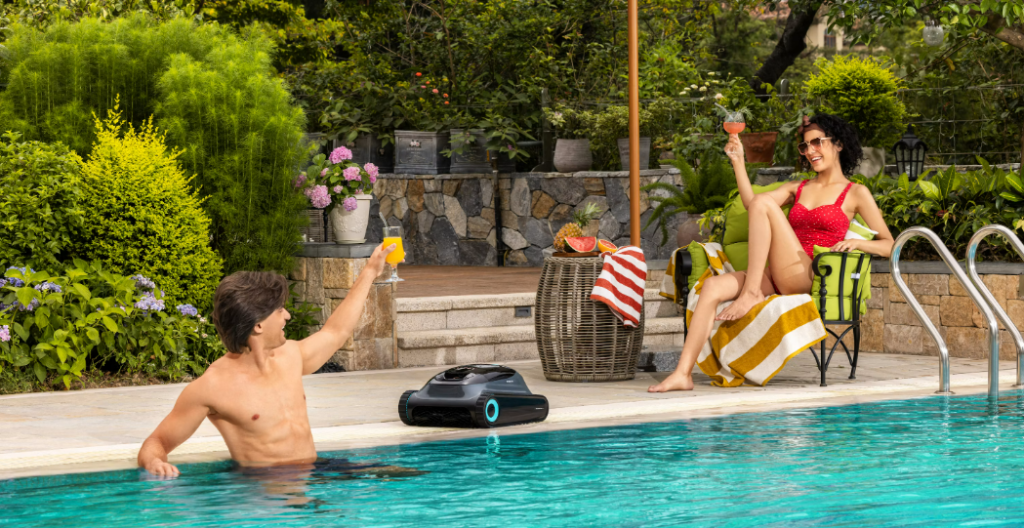
Betta Neo is designed to navigate without requiring continuous manual steering, with sensor technology supporting its movement across the pool. The Betta manual identifies a smart control board and multiple obstacle-detection sensors, including a gyroscope, while current product information highlights ultrasonic sensing and shallow-water safeguards. These systems are important because a floating robotic cleaner has to respond to walls, stairs and other structures while maintaining contact with the water surface. Betta Neo also includes anti-stranding components intended to help when the unit encounters shallow areas or structures that can interfere with movement. The manual explains that adjustable anti-stranding bars can be positioned when shallow stairs or similar structures create a risk of the cleaner becoming stuck. Betta’s approach consequently combines navigation technology with physical safeguards rather than depending on sensors alone. Movement remains an essential part of the cleaning service because the debris-collection mechanism cannot cover a pool surface if the skimmer remains stationary. The navigation system supports the broader objective of allowing Betta Neo to perform surface cleaning with limited manual direction.
Betta’s Dual-Power System for Continued Skimming
Another defining aspect of Betta Neo is its dual charging arrangement, which combines solar charging with an adapter-based power option. Betta’s product information identifies both solar power and adapter charging, while the manual explains that rechargeable batteries can receive energy from the integrated solar panel or wall charger. This setup gives Betta Neo two charging pathways rather than making the product dependent on sunlight alone. Solar charging is integrated into the operating design because the skimmer is intended for outdoor pool environments, while adapter charging provides an alternative when additional power is needed. Betta’s manual also notes that solar charging conditions change during periods of lower sunlight and specifically discusses reduced solar efficiency during fall and winter. Under those conditions, the manual provides charging and operating guidance, including use of the power adapter. The dual-power approach therefore supports the practical continuity of the surface-cleaning function. Betta Neo remains a solar-oriented robotic skimmer, but its charging architecture recognizes that outdoor energy availability is not constant throughout the year.
Betta’s App-Controlled Cleaning and Remote Operation
Betta Neo adds a connected control layer through the BettaBot app and gateway, making remote management a central part of its product design. Betta states that the gateway can provide connectivity of up to 600 feet, while the manual describes app functions covering operation, scheduling, movement control, battery information and diagnostics. The app is designed specifically for Betta Neo rather than serving as a universal control platform for the other Betta models. In automatic operation, the skimmer can function without an active mobile connection, while app pairing enables additional control and scheduling functions. Betta Neo can therefore be used as an autonomous cleaner while retaining the option of direct digital management. The app-based system also supports weather-adaptive operation and scheduled cleaning, linking software decisions with the physical movement of the robot. This combination gives Betta Neo a different operating character from a manually controlled floating skimmer because the cleaning process can be organized, monitored and adjusted through a connected interface. The digital layer is consequently part of the cleaning service itself rather than an unrelated accessory.
Betta’s Surface-Friendly Construction for Robotic Pool Movement

The physical construction of Betta Neo is designed around the demands of moving equipment across a pool surface while collecting debris. Betta describes the model with a low-profile design and soft-touch casing, with the casing intended to provide protection for pool surfaces and liners. The product also uses twin SCT motors that Betta identifies as tolerant of salt and chlorine pool environments. These characteristics are relevant because the robotic skimmer remains exposed to pool water and sunlight during normal operation. Betta Neo’s integrated solar panel supplies its rechargeable power system, while the floating body contains the propulsion and collection components needed for surface movement. The product is listed for above-ground and in-ground pools, with Betta specifying coverage for pools up to 40 feet by 60 feet under its stated ideal conditions. The physical design is consequently not separate from the cleaning function. The floating form, motor arrangement, debris intake, protective casing and solar panel work together around the requirement to remain mobile on the water while repeatedly collecting floating material. Betta Neo’s construction reflects that specialized surface-skimming purpose.
Betta’s Maintenance System for Reliable Surface Skimming
Betta Neo’s automated operation still depends on regular physical maintenance, particularly because the debris basket and moving components are directly involved in cleaning. Betta’s manual instructs that the collection basket should be emptied and cleaned, while the propellers and impeller should be inspected when movement becomes abnormal or debris interferes with operation. Hair, dirt and string can affect moving components, and the manual provides troubleshooting procedures for situations such as circular movement, reduced operation or strand mode. Betta Neo can automatically stop and attempt to restart when its system detects an obstruction, but manual inspection may still be required to restore normal operation. The product also requires attention to the solar panel because accumulated residue can reduce charging performance. Betta recommends removing the skimmer from the pool when the pool is being used and storing it in a cool, shaded location when appropriate. Pressure washing is specifically discouraged in the manual. These requirements show that Betta Neo is designed to reduce repetitive surface-skimming work, not eliminate all pool-equipment maintenance. Its automated service remains most effective when the collection system, propulsion components and charging surfaces are kept clear and properly maintained.