War Thunder is a free-to-play online military combat game centered on aircraft, ground vehicles, helicopters, and naval vessels from different periods of military history. Developed around large-scale multiplayer battles, the game combines several branches of armed forces within a single platform, allowing players to operate vehicles ranging from early twentieth-century machines to modern combat units. Its current structure includes more than 2,500 recreated vehicles, over 140 maps, and multiple gameplay environments. War Thunder also continues to receive new content, technical adjustments, events, and vehicle additions, making its gameplay environment an evolving part of the overall experience. The title supports PC platforms as well as PlayStation and Xbox systems, with cross-platform multiplayer allowing players on supported systems to participate on shared servers.
War Thunder Vehicle Variety and Historical Scope
One of the defining characteristics of War Thunder is the breadth of its vehicle collection. The game features aircraft, helicopters, tanks, armored vehicles, and naval vessels representing different technological periods and military forces. Official information describes more than 1,200 military aircraft, over 1,000 ground vehicles, more than 460 naval vessels, and over 90 helicopters within the broader vehicle selection. These machines are presented using historical references and physically based damage models, while their characteristics are designed around documented specifications. This approach gives the vehicle system an extensive historical scope, covering equipment associated with conflicts before, during, and after the Second World War, as well as later Cold War and modern military technology.
War Thunder Ground Combat and Vehicle Mechanics
Ground combat in War Thunder places armored vehicles into structured multiplayer battle environments where positioning, movement, weapon selection, and vehicle characteristics influence how engagements unfold. The ground vehicle selection includes tracked and wheeled platforms with different configurations, allowing the game to represent varied approaches to armored warfare. Vehicle behavior and damage are supported by detailed models intended to represent the physical characteristics of the machines rather than relying solely on simplified health systems. The wider combat framework also connects ground operations with aviation, creating situations in which aircraft and ground forces operate within the same battle environment. This interconnected design gives the ground component a broader role within the overall War Thunder gameplay structure.
War Thunder Aviation and Air Combat Systems
Aviation forms another major component of War Thunder, covering fighters, bombers, attackers, and other aircraft from multiple technological eras. Aircraft are modeled with individual characteristics that influence their behavior in flight, while different battle settings provide varying levels of assistance and realism. The game includes Arcade and Realistic combat environments alongside other modes, giving the aircraft system different control and engagement conditions. Recent updates demonstrate that aviation remains an active development area, with changes involving aircraft equipment, missile behavior, radar interfaces, weapon systems, and technical corrections. In September 2026, several aircraft-related adjustments were introduced through the Sky Odyssey update and subsequent patches, illustrating the continued development of the aviation component.
War Thunder Naval Operations and Multiplayer Structure
Naval warfare extends War Thunder beyond land and air combat by introducing coastal and blue-water vessels into the wider vehicle ecosystem. The fleet includes different classes of ships and boats, with vessels designed for distinct combat roles and operational environments. Naval battles form part of the game’s broader multiplayer structure, while naval-specific mechanics are periodically adjusted through updates. Recent September 2026 patch notes included a correction affecting automatic gun lead calculations in Arcade Battles and other changes connected to naval gameplay. War Thunder also provides several gameplay formats designed around different levels of combat assistance and interaction. Multiplayer battles form the central structure, while the platform also provides PvE content, historical campaigns, and solo missions. The game supports cross-platform play between compatible PC, PlayStation, and Xbox systems, allowing participants to access shared battles rather than being restricted to separate platform communities.
War Thunder Sky Odyssey and Recent Content
Recent development has added new material to War Thunder through the Sky Odyssey major update released in September 2026. The update introduced new vehicles associated with Greece, along with the CA-27, Indian Arjun Mk 1, and Indonesian Harimau. It also added Darwin Hill, a new ground battle location based on the landscapes of the Falkland Islands. The update was followed by additional patches addressing vehicle behavior, interface elements, weapons, locations, and other technical details. For example, the September 23 update corrected an issue involving Mosquito aircraft cannon information and adjusted the behavior of several unguided aircraft rockets. These changes show how major content releases are accompanied by smaller technical updates intended to refine the game after new material becomes available.
War Thunder Events and Evolving Features
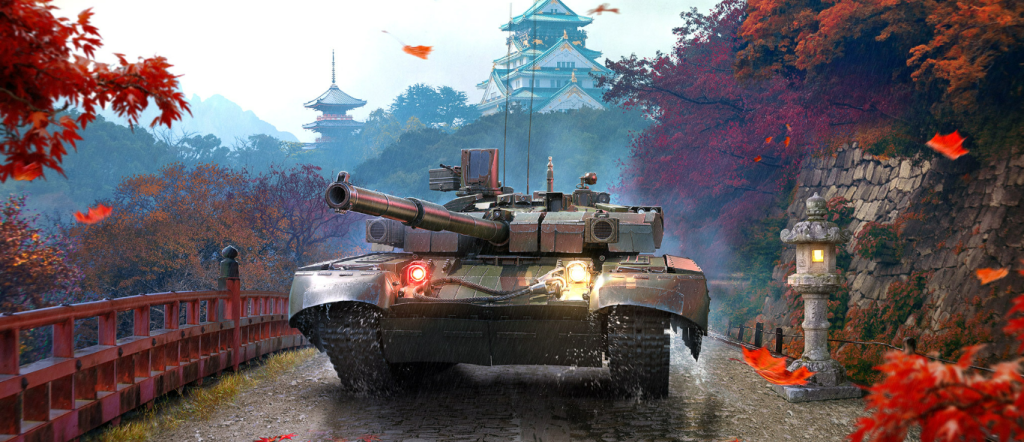
Alongside regular vehicle additions, War Thunder uses events and temporary gameplay activities to introduce additional content and objectives. Recent 2026 activities included the Space Program event, which featured the F-16XL, and Nuclear Escalation, which received dedicated balance and gameplay adjustments. The September updates for Nuclear Escalation introduced different Battle Rating brackets and modified aircraft and surface-to-air missile arrangements within the event. Other updates have addressed radar systems, missile behavior, graphics settings, server synchronization, and vehicle mechanics. This combination of major updates, events, and smaller patches means that War Thunder’s feature set is not static. Changes can affect specific vehicles, combat systems, interfaces, maps, or event mechanics as development continues.
War Thunder Accessibility Across Platforms and Systems
War Thunder is designed to operate across several gaming platforms, with official support for Windows, Linux, Mac, PlayStation 4, PlayStation 5, Xbox One, and Xbox Series X|S. The game is available without a subscription requirement, although optional in-game systems form part of its free-to-play structure. On PC, the current official requirements list Windows 10 64-bit as the minimum operating system, with a dual-core 2.2 GHz processor, 4 GB of memory, and a DirectX 11-level graphics card among the minimum specifications. The recommended configuration is higher, including 16 GB or more of memory and stronger graphics hardware. With its combination of historical vehicles, cross-platform multiplayer, multiple combat branches, regular updates, events, and a continually expanding vehicle roster, War Thunder functions as a broad online military simulation environment whose content continues to develop through new releases and technical changes.