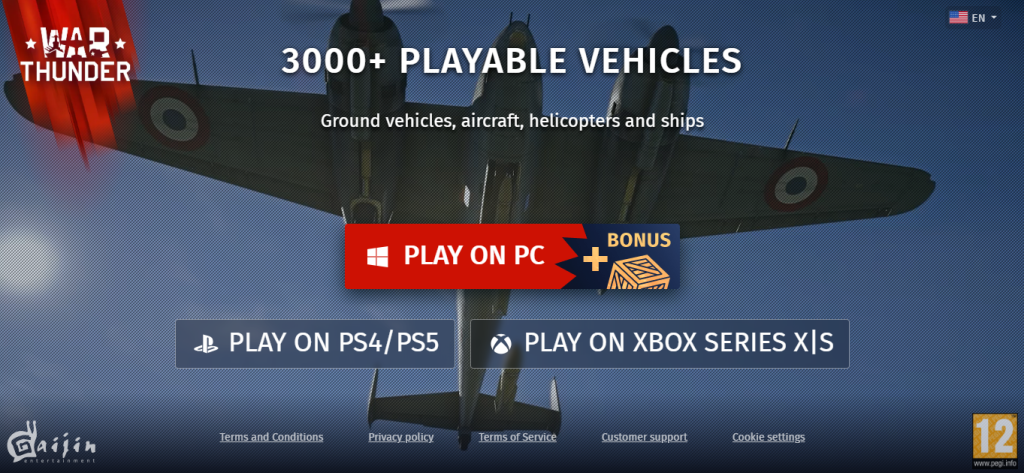
War Thunder is a free-to-play multiplayer combat game centered on aviation, armored vehicles, helicopters, and naval warfare, bringing different forms of military technology into a single online environment. The War Thunder [CPP] Many GEOs offering provides an acquisition route for the game across multiple geographic markets, while the underlying title remains the same expansive combat experience developed around historically inspired military vehicles and combined-arms battles. Rather than concentrating on one vehicle class, War Thunder allows players to move between air, ground, and naval combat while progressing through extensive vehicle research trees. The game is available across PC, PlayStation, Xbox, and other supported platforms, with cross-platform gameplay connecting players across systems. Its design combines accessible arcade-style combat with more demanding realistic and simulation-oriented modes, giving the experience considerable depth. This review examines War Thunder from the perspective of gameplay structure, vehicle variety, interface design, combat functionality, technical performance, progression and monetization, practical uses for different types of players, and its broader position within the military multiplayer genre.
War Thunder [CPP] Many GEOs Game Structure
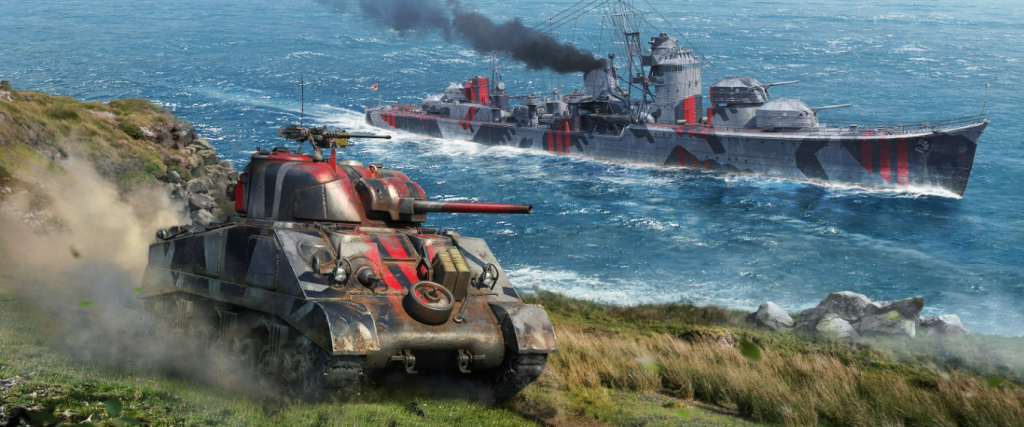
The central appeal of War Thunder comes from its broad interpretation of military vehicle combat. The game currently features more than 3,000 playable vehicles across aircraft, helicopters, ground vehicles, and ships, with battles covering historical periods from the Second World War and Cold War era through modern military technology. Instead of separating each vehicle category into an entirely different title, War Thunder integrates them into a connected progression system and allows particular battle formats to combine different forces. Ground and air units can participate together in combined battles, while naval modes introduce another dimension of large-scale combat. The structure creates a varied experience because progression is not restricted to a single style of play. Players interested primarily in tanks can concentrate on ground research, while aviation enthusiasts can develop aircraft lineups and pilots. The same account can support experimentation across multiple branches, making War Thunder substantially broader than a conventional vehicle-focused multiplayer game.
War Thunder [CPP] Many GEOs Vehicle Variety
Vehicle variety is one of War Thunder’s most substantial features and directly affects how much content the game can offer over extended play. The official game information describes thousands of aircraft, helicopters, armored vehicles, and naval vessels, with representations drawn from numerous nations and historical periods. Ground combat includes tanks, tank destroyers, self-propelled anti-aircraft systems, and other armored platforms, while the aviation side covers fighters, bombers, attackers, and helicopters. Naval gameplay adds patrol boats, destroyers, cruisers, battleships, and other vessels. This range also creates meaningful differences in handling, weapon systems, protection, mobility, and tactical roles. The vehicle research trees provide a long-term progression framework, encouraging players to learn the characteristics of individual machines rather than treating every unit as interchangeable. Regular updates continue to expand the selection, with recent content including additional modern aircraft, tanks, ships, maps, and gameplay refinements. For players interested in military technology, the depth of the vehicle catalog is therefore an important part of the overall experience.
War Thunder [CPP] Many GEOs Interface and Accessibility
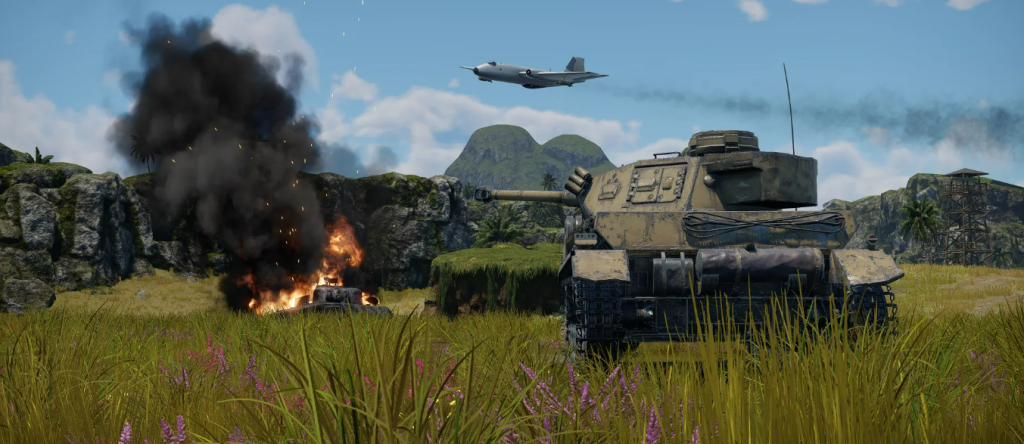
War Thunder presents a considerable amount of information to players, so the quality of its interface is important to accessibility. The hangar acts as the primary organizational space, allowing players to manage vehicles, crews, research, presets, equipment, and battle selections before entering a match. The interface has evolved through successive updates, with developers introducing refinements to areas such as vehicle presets and battle-mode selection. This structure provides considerable control, although newcomers may initially encounter more information than they would in a simpler arcade combat title. Controls can also be customized across supported platforms, allowing players to adapt input configurations to their preferred play style. War Thunder supports PC and console platforms, and cross-platform multiplayer enables users on different systems to participate in the same environment. The combination of tutorials, adjustable difficulty, multiple control approaches, and several battle formats gives beginners an entry point while retaining settings that accommodate experienced players looking for greater control over vehicle behavior.
War Thunder [CPP] Many GEOs Combat Functionality
The combat system is built around the individual characteristics of each vehicle rather than a simplified health-bar approach. War Thunder uses physically based damage models and places importance on factors such as armor placement, ammunition, weapon characteristics, mobility, flight behavior, and positioning. This approach becomes particularly noticeable in ground battles, where vehicle orientation and knowledge of vulnerable areas can influence engagements. Aircraft require attention to speed, maneuvering, weapon positioning, and energy management, while naval combat introduces range, ship configuration, weapon selection, and movement across larger environments. The game also provides several combat styles, including Arcade, Realistic, and Simulation-oriented experiences, allowing the same vehicle to feel different depending on the rules and assistance available. Combined-arms battles further expand tactical possibilities because aircraft can influence ground engagements and anti-aircraft vehicles can respond to aerial threats. The result is a combat system with considerable mechanical depth, although that depth also creates a learning curve for players unfamiliar with military vehicle games.
War Thunder [CPP] Many GEOs Performance and Updates
Performance in War Thunder depends on both the player’s hardware and the game’s continuously evolving technical environment. The official PC requirements specify a minimum configuration involving a 64-bit Windows operating system, a dual-core 2.2 GHz processor, 4 GB of memory, and a DirectX 11-capable graphics card, while more demanding hardware is appropriate for higher visual settings. The game uses detailed vehicle models, large environments, atmospheric effects, and sound design to create a more immersive battlefield presentation. Performance is also influenced by network connectivity because War Thunder is an online game requiring a permanent internet connection. Regular development remains an important part of the experience. The September 2026 Sky Odyssey major update, for example, added vehicles including the Indian Arjun Mk 1 and Indonesian Harimau, introduced the Darwin Hill ground map, and included interface and gameplay refinements. Continued updates provide new content while also addressing bugs, balance concerns, and quality-of-life issues, helping the title maintain an evolving technical and gameplay environment rather than remaining static after installation.
War Thunder [CPP] Many GEOs Pricing and Progression
War Thunder follows a free-to-play model, meaning the base game can be downloaded and played without purchasing the title or paying a mandatory subscription. Its commercial structure instead includes optional premium content, premium vehicles, in-game currency, progression-related advantages, battle passes, and other purchasable items. This distinction is relevant when evaluating the overall cost because access to the core game does not require an initial purchase, while players who want to accelerate progression or obtain additional content can spend beyond the free experience. The game’s research-tree system provides a long-term progression path through different nations and vehicle classes, with players earning resources and unlocking successive units through gameplay. Premium options can alter the pace of progression and provide additional content, while the underlying combat modes remain accessible without a conventional subscription. For users considering the War Thunder [CPP] Many GEOs offer, the main financial consideration is therefore not simply the initial cost of accessing the game but how optional purchases fit into an individual’s preferred progression style and desired collection of vehicles.
War Thunder [CPP] Many GEOs Practical Applications
War Thunder can accommodate several different play patterns because its content is not limited to one form of military combat. Players looking for short competitive matches can select accessible Arcade formats, while those interested in greater vehicle authenticity can explore Realistic and Simulation-oriented modes. Aviation enthusiasts can focus on aircraft research, tank-focused players can build ground lineups, and naval fans can develop fleets without leaving the same overall game ecosystem. The title also includes PvE missions, historical scenarios, special events, and user-created content, providing alternatives to conventional competitive matches. Its historical references and detailed vehicle models can also make it appealing to players with interests in military technology and twentieth-century combat history, although the game remains primarily an entertainment product rather than a historical simulation in every respect. The cross-platform structure adds another practical advantage for groups of players using different hardware. This flexibility makes the game suitable for casual sessions as well as longer-term progression, collection building, and experimentation across several branches of military combat.